

Updated:2025-10-07
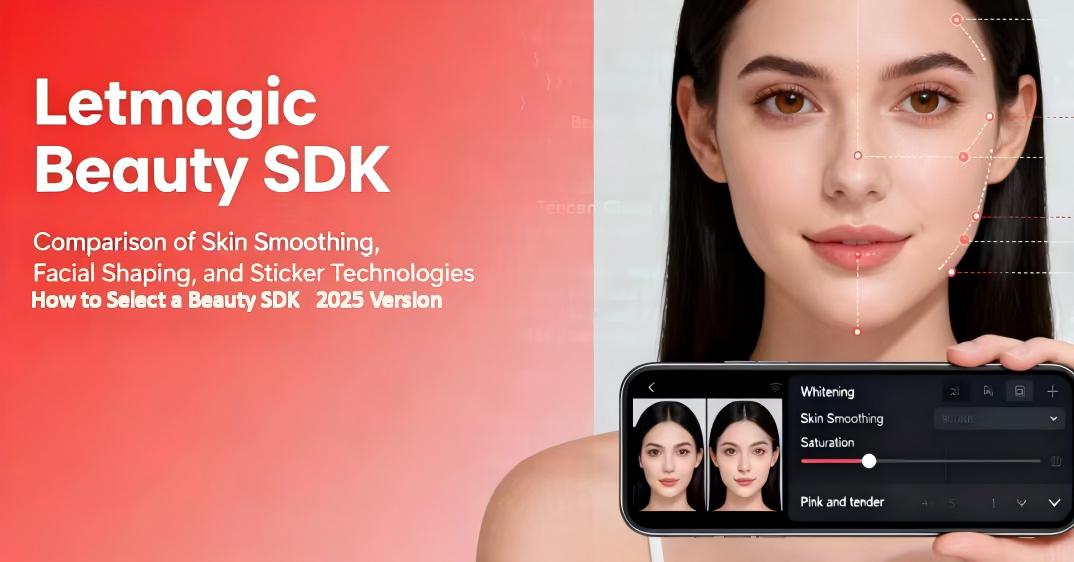
In 2025, as sectors like live-streaming e-commerce and short video creation continue to thrive, beauty SDKs (Software Development Kits) are no longer optional "value-added features" but rather essential components for image-related applications. However, developers often voice frustrations such as:
"Skin smoothing makes faces look plastic"
"Facial shaping effects suddenly glitch during group calls"
"Sticker loading slows down the entire live-stream frame rate"
Faced with numerous mainstream vendors on the market, finding a solution that aligns with one’s business needs has become a core challenge for technical teams.
Combining nearly a year of hands-on integration experience, this article delves into the technical details of three core features—skin smoothing, facial shaping, and stickers—to break down the underlying logic and key considerations for beauty SDK selection. It aims to help technical teams avoid pitfalls and establish a scientific selection framework.
I. Foundational Understanding: Discussing Technology Without Context Leads to Ineffective Selection
Many technical teams fall into the trap of asking, "Which beauty SDK has better effects?" at the initial selection stage. In reality, beauty technology in 2025 is far from a "one-size-fits-all" solution—different scenarios demand vastly different technical capabilities. Before selecting an SDK, it is critical to first define core requirements.
1. Demand Differences Across Typical Scenarios
Core needs and effect priorities vary drastically by business scenario, which can be categorized into three types:
Live-streaming E-commerce / Entertainment Live Scenarios: Core demands focus on natural beauty effects, effect loading speed, and group call synchronization latency. Features like makeup stickers and interactive effects are top priorities, as they directly impact user viewing experience and engagement .
Video Conferencing / Education Scenarios: Emphasis is placed on lightweight, energy-efficient performance and basic beauty functions. Redundant effects are unnecessary—only core parameters like skin smoothing and skin brightening are required. Complex effects will only increase device load and disrupt the smoothness of meetings or lectures.
Short Video Creation Scenarios: A balance must be struck between effect diversity, export efficiency, and support for custom development. Stylized filters and interactive stickers are high-priority features, as they help users create differentiated content and boost content visibility.
2. Methods for Requirement Sorting
It is recommended to sort requirements into three categories: "Must-have," "Can be added later," and "Not needed for now." Taking live-streaming e-commerce as an example:
Must-have:
Facial slimming must not distort exaggerated expressions (e.g., laughter).
Beauty effect synchronization must remain stable during group calls.
These two features are core to ensuring a smooth live-stream experience and cannot be omitted.
Can be added later:
Features like 3D virtual hair accessories and dynamic makeup effects can be gradually integrated based on user feedback and business iteration cycles. They do not need to be core requirements in the initial phase.
Not needed for now:
Effects like style transfer and AI face swapping have extremely low demand in live-streaming e-commerce. Forcing their integration wastes resources and may increase technical complexity.
Only by clarifying requirements and evaluating them against SDK technical capabilities can teams avoid being distracted by flashy features and focus on core needs.
II. Core Feature Breakdown: Key Indicators of Beauty SDK Technical Capabilities
Skin smoothing, facial shaping, and stickers are the three foundational functions of a beauty SDK—and the core determinants of user experience. The key indicators of their technical implementation directly reflect an SDK’s overall performance.
1. Skin Smoothing: Balancing Detail Preservation and Performance
Gone are the days of "one-click blurring" for skin smoothing. The core of modern skin smoothing lies in balancing detail preservation and light adaptability, while also ensuring optimal performance.
(1) Key Technical Requirements
Detail Preservation: The algorithm must accurately identify and target blemish-prone areas (e.g., around the nose and under the eyes) while fully preserving fine details like eyebrows and hair strands. This avoids a "plastic-like" appearance and ensures natural-looking skin texture.
Light Adaptability: It should handle diverse lighting conditions, such as backlighting and low light. For example, it should prevent localized overexposure in backlit environments and avoid losing skin texture in low-light settings, making it suitable for both outdoor live-streams and indoor shoots.
Performance Control: On mid-to-low-end Android devices, CPU usage and memory fluctuation must be controlled to prevent lag or crashes caused by excessive resource consumption from the skin smoothing algorithm—ensuring a smooth experience on basic devices.
2. Facial Shaping: Dynamic Adaptation to Avoid "Unnatural Faces"
Users dislike "unnatural faces" most, which stem from poor dynamic adaptation. High-quality facial shaping focuses on tracking accuracy, scenario adaptability, and adjustment flexibility.
(1) Key Technical Indicators
Facial Key Point Tracking: Support for at least 256 facial key points is recommended. This ensures that when users make exaggerated expressions (e.g., laughing or frowning), dynamic adjustments prevent facial sagging or jagged edges, maintaining natural facial shaping effects.
Scenario Adaptability:
Group Call Scenarios: Synchronization latency for facial shaping parameters must be ≤ 100ms to avoid inconsistent effects between participants and prevent disrupting the interactive experience.
Social Scenarios: Stylized options (e.g., Japanese-style or Korean-style shaping) should be provided, along with detailed adjustments for features like hairline and jawline—catering to users’ personalized demands for shaping precision.
Ease of Adjustment: Preset templates (e.g., "Natural," "Glamorous," "Handsome") should be available to lower the threshold for parameter adjustment and enable quick integration. At the same time, custom parameters should be supported to meet the customization needs of different businesses.
3. Stickers: Balancing Loading Speed and Compatibility
The core pain points of stickers are slow loading and poor compatibility—while also requiring strong interactivity. Specific technical requirements include:
(1) Key Technical Requirements
Loading Speed:
Initial Loading: Time must be controlled within 3 seconds. For large asset packages, preloading support is required to avoid long user waits.
Switching Response: Sticker switching latency must be ≤ 0.5 seconds to ensure smooth user operations and no noticeable delays.
Compatibility: Compatibility with mainstream GPU architectures (e.g., Mali/Adreno) is required to prevent issues like texture distortion or effect glitches, ensuring stable performance across different devices.
Interactivity: Support for gesture-triggered effects (e.g., heart gestures that trigger animations) is needed to boost user engagement. Additionally, when 3 or more effects are overlaid, frame rate monitoring must be enabled to prevent lag caused by excessive effects.
III. Adaptation and Integration: Key Considerations for Moving from "Functional" to "Smooth"
Selecting the right SDK is only the first step—post-integration adaptation ultimately determines the end-user experience. Below are key strategies to address three practical challenges: compatibility, integration difficulty, and performance optimization.
1. Compatibility: Addressing Android Device Fragmentation
Android device fragmentation is a core challenge in beauty SDK integration. A "device-tiered adaptation" strategy is required:
High-end Devices (e.g., Snapdragon 8 Gen3): Support for simultaneous 4K beauty effects and stickers is needed to fully leverage hardware performance. The frame rate must remain stable at ≥ 60fps to deliver high-definition, smooth beauty effects.
Mid-to-Low-end Devices (e.g., Snapdragon 4 Series): An effect toggle function should be provided to allow manual disabling of non-essential effects (e.g., 3D stickers). Priority should be given to ensuring smooth basic beauty functions, with a stable frame rate of ≥ 30fps and no lag.
Older Systems (Android 6.0 or below): Only basic beauty functions (e.g., skin smoothing, skin brightening) should be retained, and algorithm logic simplified. This avoids function malfunctions due to system compatibility issues and ensures core functions operate normally without crashes.
Additionally, timely adaptation to new systems (e.g., HarmonyOS 4.0) is required to cover all mainstream system versions and avoid missing key user groups.
2. Integration Difficulty: Impact on Development Cycles
The difficulty of SDK integration directly affects project timelines. A high-quality SDK must meet the following requirements for documentation and tool support:
(1) Documentation and Tool Support
Completeness: Documentation should include environment configuration details (e.g., Gradle configuration, Info.plist permission declarations) and troubleshooting guides for common issues (e.g., "initialization failure," "preview black screen")—helping developers quickly identify and resolve problems.
Cross-platform Support: Cross-platform plugins (e.g., Flutter, React Native) should be provided to eliminate the need for developers to encapsulate interfaces themselves, reducing the difficulty of integrating cross-platform projects.
Sample Code: Rich basic integration demos should be available to ensure junior developers can get core functions running within 1 day—shortening development cycles and improving integration efficiency.
3. Performance Optimization: Practical Tips
After integrating the SDK, targeted optimization is needed to enhance performance. Below are proven core tips:
Memory Optimization: Enabling OpenGL ES 3.0 context sharing on Android can reduce memory usage by approximately 10%, alleviating memory pressure.
Resource Release: Calling the pause interface in the Activity’s onPause method to release resources prevents memory leaks caused by untimely resource release, ensuring long-term stable operation of the application.
Sticker Loading: A lazy loading mode should be adopted, where sticker resources are only loaded when the user clicks on them. This reduces performance pressure during app startup and speeds up launch times.
Resolution Adaptation: Beauty resolution should be dynamically adjusted based on device performance (e.g., reducing to 720P on low-end devices). This balances beauty effect quality and device performance to avoid lag.
General Recommendation: Thorough testing on mid-to-low-end devices (e.g., budget smartphones under CNY 1,000) is essential. Most performance issues concentrate on such devices—relying solely on high-end device data will not ensure coverage of most users’ scenarios.
IV. Selection Framework: Matching Scenarios to Solutions
Based on the technical analysis above, the following framework helps technical teams quickly identify the right SDK by matching optimal SDK features to different business scenarios.
1. Live-streaming E-commerce / Entertainment Live Scenarios
Core Demands: Natural beauty effects, stable group call synchronization, rich sticker resourcesKey Selection Criteria:
Skin smoothing must have strong light adaptability to support multi-scenario live-streams (outdoor/indoor) and avoid beauty effect degradation due to lighting changes.
Facial shaping parameter synchronization latency during group calls must be ≤ 100ms to ensure consistent effects between participants.
Support for custom sticker uploads is required to meet brand customization needs. Meanwhile, preloading can be used to resolve slow initial sticker loading—making it suitable for platforms pursuing premium user experiences.
2. Video Conferencing / Educational App Scenarios
Core Demands: Lightweight performance, broad compatibility, high stabilityKey Selection Criteria:
Skin smoothing and facial shaping algorithms must be lightweight to reduce CPU and memory usage—avoiding disruptions to meeting or teaching smoothness.
Compatibility should cover a wide range of devices, including older systems (Android 6.0 or below) and domestic chips (e.g., Kirin 810), ensuring no users are excluded due to compatibility issues.
Technical support should have fast response times, with peak-hour issues addressed within 1 hour to ensure service stability.
3. Short Video Creation / Beauty Social App Scenarios
Core Demands: High facial shaping precision, interactive effects, support for secondary developmentKey Selection Criteria:
Facial shaping must support detailed adjustments (e.g., hairline, jawline) and stylized options (e.g., Japanese-style, Korean-style) to meet users’ high demands for shaping precision.
Stickers should support gesture-triggered interactive effects to boost user engagement—ideal for short video content creation.
Interfaces for secondary development of custom filters should be provided to help create differentiated visual effects. Meanwhile, performance monitoring is necessary to prevent lag when multiple effects are overlaid.
V. Additional Note: Compliance Cannot Be Ignored
Facial data is classified as sensitive personal information. When selecting an SDK, compliance must be a key focus to avoid legal risks:
Vendors must provide a Data Processing Statement specifying data processing methods (local processing vs. cloud upload) and automatic data destruction mechanisms—ensuring compliance with privacy protection requirements.
Priority should be given to vendors certified under Level 2.0 of China’s Information Security Technology Standards to ensure the security of data storage and transmission.
For overseas business needs, confirm that the vendor supports international compliance standards (e.g., GDPR, CCPA) to avoid compliance-related disruptions to overseas operations.
Conclusion
Beauty SDK selection in 2025 is no longer a simple "Choice A or B" question, but a matching exercise to find the optimal solution for specific scenarios. The core decision-making logic can be summarized as follows:
For skin smoothing: Evaluate detail preservation, light adaptability, and performance control.
For facial shaping: Evaluate dynamic naturalness, scenario compatibility, and adjustment flexibility.
For stickers: Evaluate loading speed, device compatibility, and interactivity.
For implementation: Balance integration difficulty, performance optimization, and compliance.
It is hoped this article helps technical teams avoid detours and focus their technical efforts on enhancing user experience—rather than troubleshooting pitfalls.